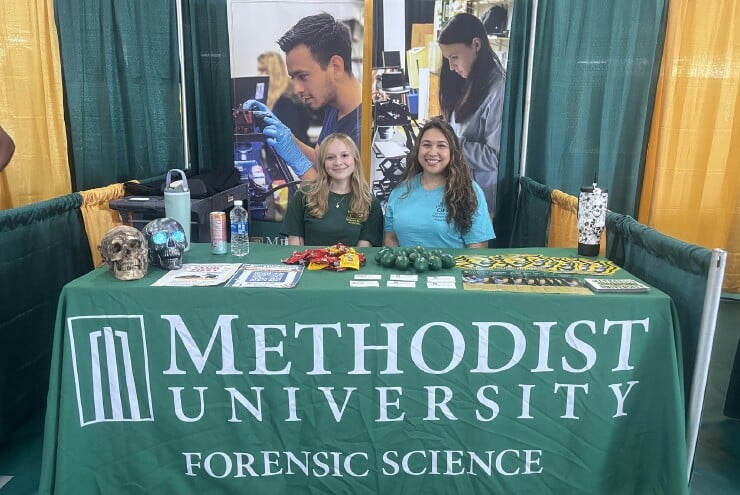
For students curious about crime, investigations, or the justice system, the Criminal Justice & Forensic Science Association club, known as CJFSA, cuts the yellow tape and offers an entry point to just that. Although designed for criminal justice and forensic science majors, the club welcomes anyone interested in criminal justice, forensic investigation, or the behind-the-scenes work that helps solve real cases, whether that interest stems from a favorite crime show, a class, or future career goals.
The start of the new year for many students at Methodist University means new goals, a reset in routines, and the chance to get involved in opportunities beyond the classroom. While most new year hobbies are often perceived as creative outlets or ways to unwind, they can also open doors to career development and lifelong connections.
For students curious about crime, investigations, or the justice system, the Criminal Justice & Forensic Science Association club, known as CJFSA, cuts the yellow tape and offers an entry point to just that. Although designed for criminal justice and forensic science majors, the club welcomes anyone interested in criminal justice, forensic investigation, or the behind-the-scenes work that helps solve real cases, whether that interest stems from a favorite crime show, a class, or future career goals.
That sense of access and inclusion is intentional, said Steven Downs, D.B.A., associate professor and director of forensic science at Methodist University and faculty advisor for the club.
“When students are involved, they’re more connected,” Downs said. “Upper-class students help guide under-class students in ways that don’t always happen in the classroom. That peer-to-peer support matters.”
Downs said CJFSA is designed to prepare students for life beyond graduation, by pairing academic learning with professional context and community engagement. Under his advisory, the student led club has grown into one of the more active groups on campus, offering career-facing opportunities with campus involvement.
For CJFSA President Aliyah Cardin, that’s exactly what drew her in, although the interest came to her naturally. A transfer student, Cardin came in as a junior, with her associate’s degree in forensics and was eager to continue learning in the field. After discovering the organization through one of her classes at MU, she began attending meetings and found herself pulled into the club’s opportunities. It was attending her first professional conference with the club at the North Carolina Association for Identification that solidified her involvement.
“I’d never been to a conference before,” Cardin said. “Being surrounded by professionals and seeing how many paths exist really changed how I viewed the field.”
From there, Cardin took on the role of event coordinator for the club before being elected president. Now in her second year leading the club and preparing to graduate this spring, she oversees programming, outreach, and member engagement. Downs credits her leadership as a driving force behind the group’s continued success.
“She stepped into leadership early and showed all the right traits,” he said. “Managing this level of involvement while balancing coursework for four straight semesters is impressive. The club has benefited greatly from her commitment.”
Throughout the academic year, CJFSA hosts a mix of professional development events, interactive experiences, and fundraisers designed to make opportunities more accessible to all students. Professional panels and guest speakers allow members to hear directly from law enforcement officers, forensic specialists, and other industry professionals about their career paths, educational requirements, and day-to-day responsibilities.
“These events give students the chance to talk face-to-face with people they want to be one day,” Cardin said. “It helps make the future feel more real and attainable.”
In addition to attending the North Carolina Association for Identification conference each fall, CJFSA travels to the American Academy of Forensic Sciences conference each February and the annual conference of the Vidocq Society, a nationally recognized cold-case organization, in Philadelphia. These experiences expose students to a wide range of opportunities and connect them with professionals in the field. Through club-supported activities like these, students also engage in crime scene simulations and supervised trips to the gun range, where they gain practical insight into firearm identification, safety, and forensic analysis.
The club hosts fundraising events such as pumpkin-painting fundraisers and its annual murder mystery night to help offer travel and lodging relief for its members to participate in these conferences. Beyond professional development, CJFSA invests in the community through service and giving back, earning formal recognition from the Fayetteville Police Department for its service initiatives.
CJFSA typically holds one general meeting per month, with additional small-group meetings scheduled throughout the semester. Students interested in joining or learning more can visit the CJFSA page for contact and details on how to be added to the club’s Groupme or explore our Criminal Justice or Forensic Science pages for more information on these programs.