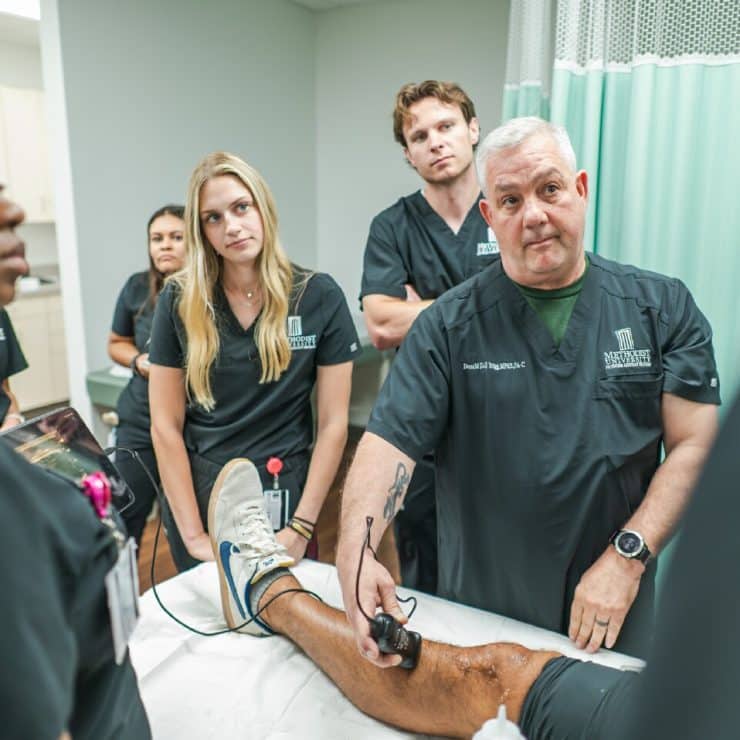
Health Science
The Bachelor of Science in Health Science (BSHS) program offers a dynamic and adaptable curriculum that builds essential health science competencies while encouraging critical thinking and analysis. With an interdisciplinary approach, students engage in collaborative learning across health-related fields, fostering a well-rounded understanding of the complex landscape of modern healthcare.
This emphasis on integration and teamwork prepares students to navigate and contribute to systems of care that prioritize collaborative practice and holistic, patient-centered solutions. The program’s adaptable structure allows students to tailor their academic experience to align with their individual interests and career aspirations, preparing them for a wide range of professional opportunities or advanced study in the health sciences.
Common Career Paths
Some of the top jobs for those with Health Science bachelor degrees include Health Unit Coordinator, Clinical Research Coordinator, Health Information Specialist, Public Health Specialist, Patient Records Technician, Biotechnology Specialist, Health & Community Educator, Medical Sales Representative, and more.
Graduates in Health Science are also well-prepared to pursue graduate degrees in Medicine, Physician Assistant Studies, Physical Therapy, and Occupational Therapy.
Common Salary Ranges for Graduates
As mentioned above, there’s a long list of career opportunities for those with Health Science degrees. But, Salary.com & ZipRecruiter report the average annual salary for the following positions in 2026:
- Health Unit Coordinator: $34,063
- Clinical Research Coordinator: $54,225
- Health Information Specialist: $82,246
- Public Health Specialist; $62,169
- Patient Records Technician: $51,551
- Biotechnology Specialist: $73,198
- Health & Community Educator: $41,800
- Medical Sales Representative: $79,428
Average Tuition Cost
The average cost for an incoming residential freshman to attend MU is less than $18,000 – similar to the cost of attending one of the big-box public schools, but with the enhanced value of a highly-regarded private school with a 12:1 student-to-faculty ratio.
While tuition varies, depending on a student’s financial aid package, it’s important to know that the average financial award for an incoming residential freshman at MU is more than $34,000.
Financial Aid & Scholarships
More than 97% of MU students receive some form of financial aid, with the University offering more than $24 million annually to students for scholarships. If a student is active military, family of active military, or a veteran, they may also qualify for MU’s military education benefits.

Interested in Studying Health Science at Methodist University?
If you have questions, reach out to Dr. Meredith Gronski using the contact info at the bottom of the page. If you’re ready to apply today, click the button below!
Mission Statement
The mission of the Bachelor of Science in Health Science (BSHS) degree is to prepare medically inclined students to recognize the global nature of health with an emphasis on cultural competency and to be responsive to the needs of underserved populations. Graduates will be equipped to pursue professional graduate degrees or fill various roles that advocate health in business, community organizations, and supporting roles across the health care industry.
Vision Statement
The vision of the Bachelor of Science in Health Science (BSHS) is to be recognized as an exceptional, accessible, and flexible program for students pursuing a profession in the health care sector.
Major Requirements
The major in Health Science consists of 58-59 credits, distributed as follows:
| APM 3040 Psychosocial Aspects of Aging in Paramedic Practice (2) OR SWK 3500 Human Diversity & Populations-At-Risk (3) | KIN 2110 Professions & Development in Health Sciences (1) |
| APM 4500 Research Methods (3) | KIN 2160 Research Seminar (3) |
| *BIO 3060 Human Anatomy & Physiology I (4) | KIN 2170 First Aid/CPR/AED (2) |
| *BIO 3080 Human Anatomy & Physiology II (4) | KIN 2900 Structural Kinesiology (3) |
| HCA 2300 Medical Terminology (3) | KIN 3070 Fitness & Exercise Psychology (3) OR PSY 3360 Health Psychology (3) |
| HCA 3050 Health Care Leadership (3) | KIN 3120 Biomechanics (3) |
| HCA 3800 Medical, Legal, & Ethical Issues in Health Care (3) | KIN 3720 Internship (3) |
| HCA 3900 Global Health (3) | PSY 2040 Lifespan Development (3) |
| HCA 4300 Cultural Competence in Patient Care (3) | SOC 4000 Epidemiology (3) |
| HCA 4700 Foundations of Health Care Policy (3) | WEL 2180 Concepts of Fitness & Wellness (3) |
*Other acceptable Anatomy & Physiology courses may include BIO 2110 and BIO 2120 or KIN 2850 and KIN 2860.
Contact
Candace Langston, Ed.D.