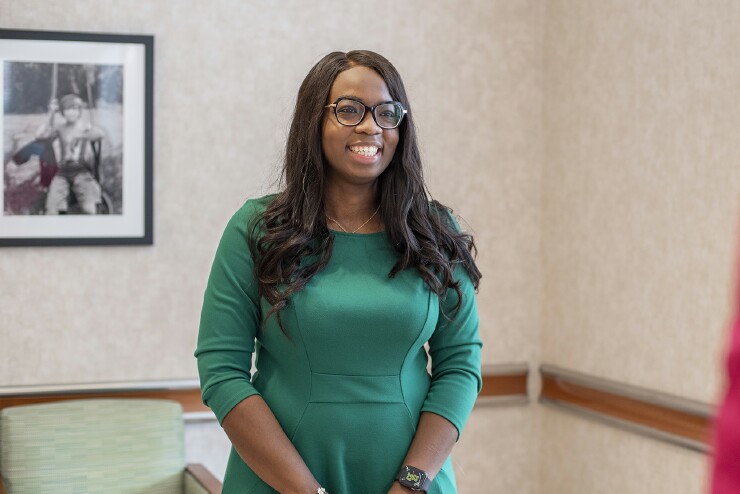
At the new Methodist University Cape Fear Valley Health School of Medicine, Dr. Jerlinda Ross is helping lay the foundation for a program designed to respond to a need. Southeastern North Carolina faces physician shortages and gaps in access to care, particularly in underserved communities. The School of Medicine was created with that reality in mind.
This Black History Month Methodist University’s spotlight series has moved through time. We’ve reflected on the “Then” through alumni stories like Randal Webster and recognized the “Now” in the voices of current students like Jeremiah Sansbury. The final chapter in the series highlights what’s “Next.”
At the new Methodist University Cape Fear Valley Health School of Medicine, Dr. Jerlinda Ross is helping lay the foundation for a program designed to respond to a need. Southeastern North Carolina faces physician shortages and gaps in access to care, particularly in underserved communities. The School of Medicine was created with that reality in mind.
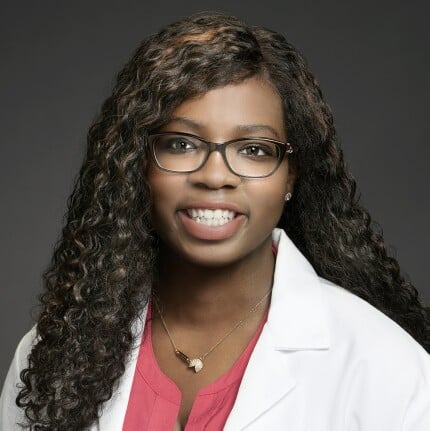 As chair and associate professor of Health System Science, Ross is shaping how future physicians will understand not only medicine, but the systems that surround it.
Her path into Health System Science is a reflection of the evolving world of medical education. Ross says traditionally, students were taught the science of the body and then trained to apply it in clinical settings. However, Health System Science at the School of Medicine will ask students to think beyond just the exam room. It is to focus on how healthcare systems run, how policy decisions influence treatment, and how factors like efficiency, physician burnout, and population health shape patient care. Differing from programs like anatomy or basic clinical skills, Health System Science does is less static.
“If something changes in your state, if policy shifts, if a hospital closes in your region, the health system changes,” Ross said. “That impacts how care is delivered.”
At the School of Medicine, which welcomes its first class this summer, she’s focusing on years one and two of the curriculum, looking to help students develop systems-level thinking from the beginning of their training. In a program that’s in its early stages, that responsibility carries weight. The decisions made now will shape the identity of the School of Medicine for years to come.
Early in her career, there was limited representation in the spaces Ross occupied. The field was largely male dominated, there were few women, and generational differences shaped perspective and opportunity for those present.
With a clinical background in gynecologic oncology, Ross has worked in areas of medicine in which disparities are not theoretical. Black women, for example, face higher risks of complications related to reproductive health. Access, trust, and understanding can directly affect outcomes. Experience in those spaces reinforced her belief that diversity in medicine can strengthen care through different viewpoints into decision-making.
“By having diversity of any kind really strengthens the organization because we can bring different viewpoints,” she said.
The conversation, however, does not stop at race alone. Representation, in her view, includes religion, gender, geography, lived experience, and generational perspective.
“Regardless if it’s your religion, if it’s your skin color, if it’s even where you’re from, those things really help with not just patient belonging, but student belonging,” she said. “Part of getting through medical school is the difficult coursework, but some of it is just having that sense of belonging so you have that resilience.”
As the School of Medicine prepares to serve a diverse region, leadership that reflects and understands varied communities strengthens both education and trust. In a field in which access and outcomes can be influenced by systemic disparities, visibility in academic medicine contributes to the larger conversation about equity in care.
Ross sees this next generation of students as the key to that change.
“This cohort is the future of medicine,” she emphasized. “They are the ones who will make the change.”
 Preparing the next generation of doctors will go beyond textbooks. Ross says the school plans to integrate artificial intelligence, virtual reality, and augmented reality into the Health System Science curriculum with the goal not simply to introduce new tools, but to teach students how to use them responsibly.
“We want them to use AI efficiently, but also to question it,” she said.
Her work aligns with what she says healthcare professionals call the Quintuple Aim, which includes improving patient care, enhancing quality, advancing population health, maintaining system efficiency, and supporting physician well-being. Since Health System Science evolves as policies and systems change, students are expected to change, as well. They must be able to recognize problems in healthcare systems and create solutions that serve their community.
In a region working to address physician shortages, that adaptability is essential. Black History Month honors those who have opened doors in generations past. At the Methodist University Cape Fear Valley Health School of Medicine, Dr. Jerlinda Ross is helping ensure the next generation walks through those doors prepared not only to practice medicine, but to improve it.